Currently accepting same-day emergency patients across Louisville, KY. Average callback time is under 12 minutes.
Professional Teeth Whitening in Louisville, KY | In-Office and Take-Home Options
In-Office and Take-Home Whitening in Louisville, KY
Emergency Dentists Louisville offers professional teeth whitening for the entire Louisville area. Even with good brushing and regular cleanings, teeth naturally darken with age, and coffee, tea, wine, and tobacco all add their own layers of stain on top.
In-office whitening can noticeably brighten natural teeth in a single supervised visit, although the amount of shade change varies by the type and depth of discoloration. Here's what causes discoloration, which option fits your teeth, and why the drugstore aisle can't match a dentist's chair.
Tell us what's going on. We'll call you back fast.
We'll respond same-day. If you need to be seen right now, call us directly at 502-793-2102.
In-Office and Take-Home Teeth Whitening in Louisville
Our teeth whitening in Louisville, KY lifts teeth several shades beyond what over-the-counter strips achieve, using professional-strength gel and custom trays that keep it off your gum tissue and away from sensitive areas. We are the Louisville practice that treats any active decay or gum inflammation first, because whitening an untreated tooth is genuinely painful and the result does not hold.
What Makes Teeth Lose Their White
Knowing where your discoloration came from tells us how well it will whiten:
Food and drink. Coffee, tea, red wine, dark sodas, and berries deposit stain particles on enamel, and acidic diets thin the enamel itself, letting the yellower layer underneath show through.
Tobacco. The dark particles in every form of tobacco stick to teeth, and smoking's drying effect on the mouth makes stains adhere even more easily.
Age. Enamel thins naturally over the decades while the dentin beneath it darkens, which is why even well-cared-for teeth yellow over time.
Medications and internal causes. Certain antibiotics taken during tooth development, old dental trauma, and some prescription rinses create stains inside the tooth rather than on its surface.
That last category matters for planning. Peroxide whitening agents diffuse through enamel and dentin and break down stain-causing molecules through oxidation, so they work best on many yellow and age-related stains. Gray discoloration, tetracycline staining, fluorosis, and trauma-related discoloration respond differently, and porcelain, composite, crowns, veneers, and fillings do not change shade with peroxide whitening. The quick exam before whitening sorts exactly this out, so you invest in treatment that will actually work on your teeth.
Your Whitening Options, From Weakest to Strongest
Whitening ToothpasteMild abrasives that polish away daily surface stains. It never changes your underlying shade, but it's a solid maintenance tool after real whitening.
Over-the-Counter StripsThe best drugstore option, with modest results over weeks of daily use. One-size-fits-all fit and low-strength gel are the built-in ceilings.
Custom Take-Home TraysA controlled, dentist-supervised option: custom-fitted trays help control gel placement and reduce unnecessary contact with the gums compared with poorly fitting trays. Worn 30 to 60 minutes a day, results build over one to two weeks, and the trays last for years of touch-ups.
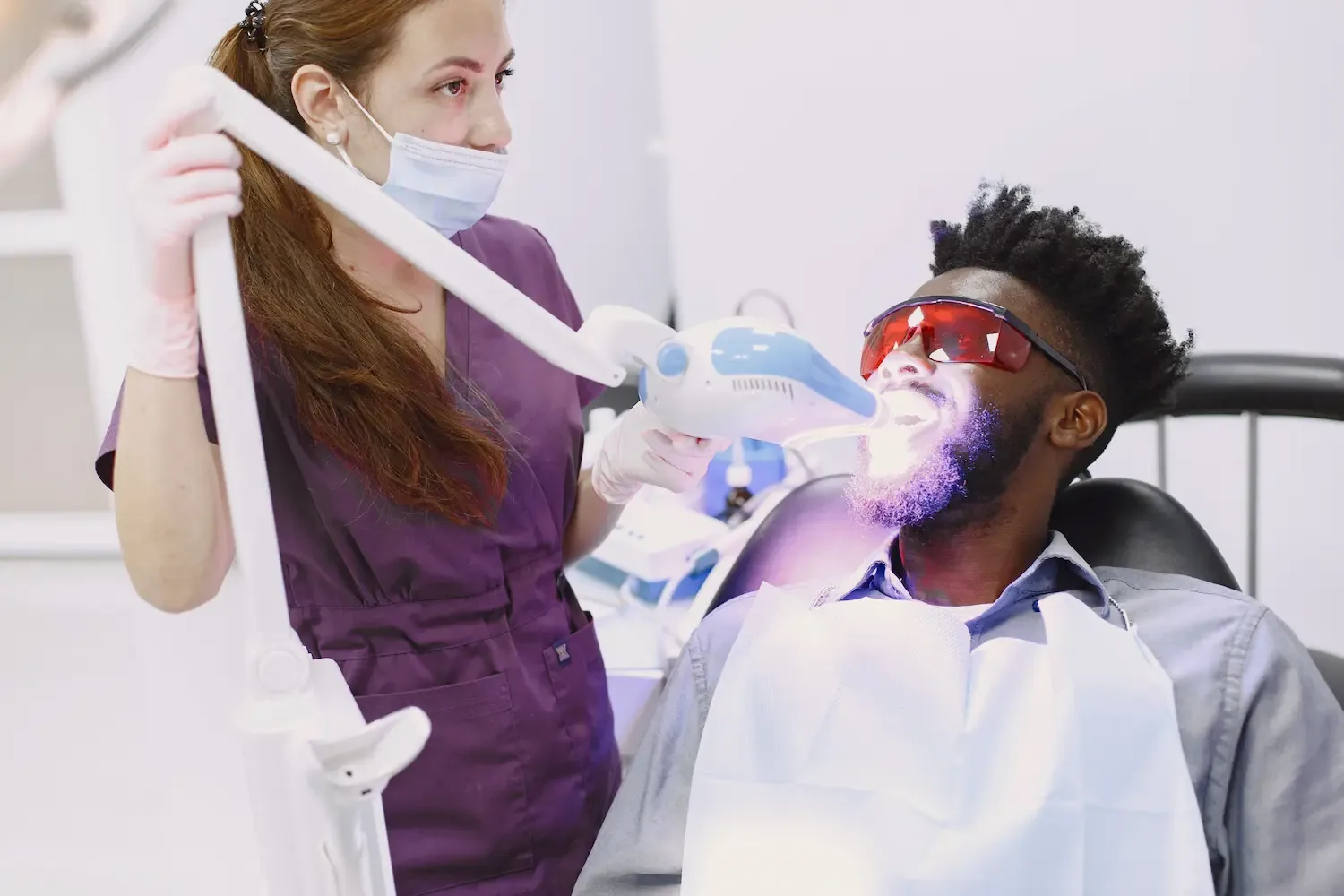
In-Office WhiteningThe fast lane: a single supervised visit of about an hour, using the strongest gel available with your gums shielded by a protective barrier. Most patients leave visibly brighter the same day, which makes this the pick when your event is less than a week away.
The longest-lasting results usually come from combining the last two: an in-office session for the dramatic jump, then trays at home to maintain the shade. We'll recommend a path based on your starting shade, sensitivity history, and deadline.
What to Expect at Your In-Office Whitening Visit
1. Shade Assessment and Planning
We record your starting shade, check your sensitivity level, and confirm your teeth and gums are healthy enough to whiten. If plaque or tartar would block the gel, a cleaning first gets you the most from your session, which is why many patients pair whitening with their regular teeth cleaning.
2. Protection First, Then the Gel
A barrier is placed over your gums and a desensitizing agent is applied to the teeth before any whitening gel touches them. The professional-strength gel then goes on in monitored rounds, removed and reapplied until you reach your target shade.
3. Finishing and the First 48 Hours
We record your final shade and apply a remineralizing gel to calm the teeth and minimize sensitivity. Then comes the one rule that protects your investment: for the first 48 hours, the microscopic pores in your enamel remain open and stain-hungry, so skip coffee, red wine, tomato sauce, and anything else that would stain a white shirt. Follow that window and your results start life at full brightness.
Why Not Just Buy Whitening Strips?
This is the fair question behind every whitening consult, so it gets a straight answer. Strips do work modestly, and for a slight lift on a tight budget they're a reasonable start. But three limits are built into every over-the-counter product. Strength: OTC peroxide levels are a fraction of professional gels, which is why strips need weeks to produce what an office visit does in an hour. Fit: one-size-fits-all strips don't match your teeth, so gel misses curved surfaces and seeps onto gums, giving uneven results and sore gums. Supervision: nobody checks whether your discoloration will respond or matches the strength to your enamel, and unsupervised over-whitening is what causes most sensitivity and enamel trouble.
Professional whitening solves all three at once: stronger gel, trays and barriers made for your mouth, and a dentist confirming the plan before you spend anything. Strips rent a small improvement. Supervised whitening buys a big, even one, with your gums and enamel protected the entire time.
Sensitivity, Safety, and How Long Results Last
The most common worry is sensitivity, so here's the honest picture. Temporary sensitivity can occur because peroxide reaches the dentin and pulp through microscopic pathways, and it typically settles within a day or two. Stronger sensitivity does not mean a better result. We minimize it before it starts: desensitizing gel before treatment, gum barriers throughout, remineralizing gel after, and strength matched to your enamel. If you're prone to sensitive teeth, a potassium nitrate toothpaste like Sensodyne for a week beforehand helps, and the gentler tray route may be your best fit. Performed under supervision, whitening does not damage enamel.
Whitening results fade gradually and depend on diet, smoking, oral hygiene, original stain type, and occasional touch-up treatment, with your habits setting the pace: daily coffee, wine, and tobacco refill stains faster, while rinsing after dark drinks and keeping up your cleanings stretches the brightness out. Trays make touch-ups easy when the shade drifts, and to protect your enamel, full re-whitening is best kept to about once every six to twelve months. One money-saving tip: if you're considering a crown or veneer on a front tooth, whiten first, since restorations are color-matched and won't bleach later. And if your stains are the internal kind gel can't fix, we'll say so plainly and walk you through dental veneers or bonding instead of selling rounds of gel that won't deliver.
Why Choose Emergency Dentists Louisville
Exam-first whitening that confirms your stains will respond before you spend a dollar.
In-office and custom take-home trays, or both combined for the biggest, longest-lasting lift.
Sensitivity managed at every step: desensitizers before, gum barriers during, remineralizing gel after.
Event-deadline planning that works backward from your wedding, reunion, or photo date.
Twelve years in practice brightening smiles for families throughout Louisville and the surrounding area.
Frequently Asked Questions
How many shades whiter will my teeth get?
The amount of shade change varies by the type and depth of your discoloration, and many patients see a noticeable improvement from a single in-office visit. Your starting shade and stain type set the ceiling, which is what the pre-whitening assessment tells us.
How long does professional whitening last?
Typically from many months up to a few years, depending on your coffee, wine, and tobacco habits. Touch-ups with custom take-home trays make it easier to maintain the shade without starting over.
Does teeth whitening damage enamel?
No, professionally supervised whitening does not damage enamel. The risks come from unsupervised overuse of strong products, which is exactly what barriers, matched gel strengths, and a sensible schedule prevent.
Will whitening work on my crowns, veneers, or fillings?
No, whitening gel only changes natural enamel, so restorations keep their original shade. If crowns or fillings sit in your smile zone, we plan the shade strategy around them so everything ends up uniform.
Is teeth bleaching the same as teeth whitening?
In dentistry, "bleaching" usually refers to peroxide-based chemical lightening of tooth color, while "whitening" is the broader patient-facing term that can also include removal of surface stains. Whichever term you searched, the treatment here is the same supervised care.
Several Shades Brighter, Often in a Single Hour
Skip the strip-a-day guessing game. Get a real shade assessment and a whitening plan built for your teeth and your deadline.