Currently accepting same-day emergency patients across Louisville, KY. Average callback time is under 12 minutes.
Root Canal Treatment in Louisville, KY | Relief for Infected or Inflamed Teeth
Endodontic Treatment for Infected Teeth in Louisville, KY
Emergency Dentists Louisville offers root canal therapy for the entire Louisville area. Few procedures carry a worse reputation than the root canal, and few reputations are less deserved. A modern root canal feels a lot like getting a filling, and it exists to stop your pain, not cause it.
Root canal treatment is one of the most commonly performed dental procedures, and it saves natural teeth that would otherwise be extracted. If you have a throbbing tooth, deep sensitivity, or a dentist has told you the nerve is infected, here's what's actually involved.
Tell us what's going on. We'll call you back fast.
We'll respond same-day. If you need to be seen right now, call us directly at 502-793-2102.
Root Canal Treatment for Tooth Infection and Pulp Inflammation
Our root canal therapy in Louisville, KY removes infected pulp and saves teeth that would otherwise need extracting, usually across one or two visits, and with modern anesthesia the appointment feels much like having a filling placed. We are the Louisville practice that starts root canals on emergency patients the same day they call, then restores the tooth with a crown when cuspal coverage is needed to reduce the risk of fracture afterward.
What a Root Canal Actually Is
Every tooth has three layers: hard enamel on the outside, dentin beneath it, and a soft core called the pulp, which holds the tooth's nerve and blood vessels. When deep decay, a crack, or trauma exposes that pulp to bacteria, it becomes inflamed and eventually infected, and that infection is what causes the deep, throbbing pain people associate with a "bad tooth."
Root canal treatment removes inflamed, infected, or necrotic pulp tissue from the pulp chamber and root canals, disinfects and shapes the canal system, and seals it with a rubber-like filling material called gutta percha. The tooth stays in your mouth, keeps functioning, and the pain source is gone. In most cases a crown is placed afterward to protect the treated tooth against fracture.
Signs You Might Need a Root Canal
Severe or spontaneous tooth pain, especially throbbing pain that wakes you at night
Lingering sensitivity to hot or cold that hangs around after the temperature is gone
Pain when biting down or chewing on one specific tooth
Tender, swollen gums around a single tooth, or a pimple-like bump on the gum
A tooth that has darkened or discolored compared to its neighbors
Pain that radiates into your jaw, ear, or the side of your head
Important: an infected tooth doesn't always hurt. Significant infection can exist in the bone around a tooth root with no pain at all, which is why a strange bump, discoloration, or sensitivity is worth an exam, pulp testing, and an X-ray even when it isn't bothering you much.
Does a Root Canal Hurt?
This is the objection that keeps people suffering with an infected tooth for weeks, so it deserves a straight answer: no. The area is fully numbed with local anesthetic before treatment begins, and the procedure itself feels similar to a long filling appointment. The horror stories come from decades-old techniques and, more often, from the pain of the infection before treatment, which the root canal is what actually stops.
Another myth worth killing: a root canal does not leave you with a "dead tooth." The treated tooth continues to receive blood supply and support from the tissues that hold it in your jaw. It loses sensitivity to hot and cold but still responds to biting pressure, and with a proper restoration it can continue to function for many years.
Afterward, some soreness in the surrounding bone is normal and typically peaks around 48 to 72 hours before fading. Avoid chewing on the treated tooth for a few days, and use over-the-counter pain relief as directed.
What Happens During Treatment
1. Numb and Access
The tooth is numbed and a small opening is made in the top to reach the pulp chamber.
2. Clean and Shape
The infected pulp is removed and each canal is measured, cleaned, disinfected, and shaped.
3. Seal and Restore
The canals are sealed with gutta percha, and the tooth is restored with a filling and, usually, a crown.
Most root canals are completed in about 60 to 90 minutes. Depending on the number of canals in the tooth and the extent of the infection, treatment takes one visit or occasionally two. You can drive yourself home afterward, and most patients are back to their normal routine the same day.
Reported success rates for root canal therapy run as high as 90 to 95 percent. On the rare occasion a treated tooth acts up years later, retreatment can often save it a second time.
Root Canal vs. Extraction: Why Saving the Tooth Wins
When a tooth is infected, you generally have two paths: treat it or remove it. Pulling the tooth can look cheaper on the day, but it starts a chain of costs the root canal avoids. A missing tooth needs to be replaced with an implant, bridge, or partial to prevent the neighboring teeth from drifting, and replacement often costs more in total than root canal treatment plus a crown. Nothing manmade functions quite like your own tooth, either.
That said, not every tooth can be saved. If the damage is too deep or the chance of success is poor, we'll tell you at the consultation rather than putting you through a treatment that's likely to fail.
Cost and Insurance
Root canal cost depends on which tooth is involved, since molars have more canals than front teeth and take more time. Most dental insurance plans cover a significant portion of root canal treatment, and it's consistently less expensive than extracting the tooth and replacing it with an artificial one. You'll get a written estimate after your exam and X-rays, before any treatment is scheduled.
Is This an Emergency?
An infected tooth is on a timeline whether it hurts today or not. Call us the same day if you're experiencing:
Severe, throbbing pain that pain relievers barely touch
Swelling in your gums, jaw, or face
Fever or feeling generally unwell alongside tooth pain
A bad taste or pus draining near the tooth
Pain so intense it's interfering with sleep or eating
Dental infections can spread beyond the tooth if ignored, and the longer they progress, the harder the tooth is to save. As an emergency dentist in Louisville KY, we reserve time for exactly these calls: 502-793-2102.
Why Choose Emergency Dentists Louisville
Same-day evaluations for patients in active pain, because infected teeth don't respect appointment books.
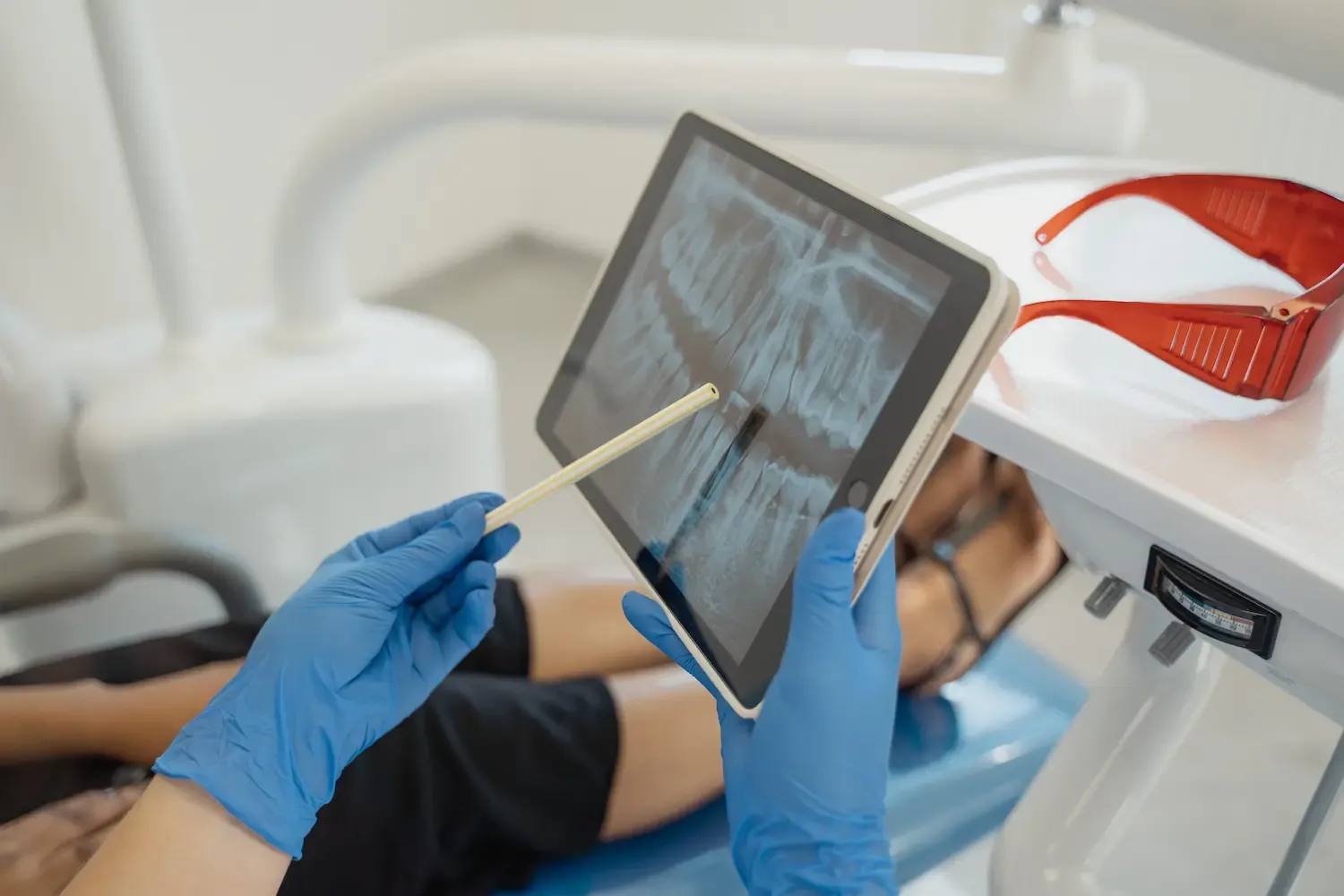
In-house digital imaging for accurate diagnosis of what's happening inside the tooth and the bone around it.
Sedation options available for patients whose anxiety has kept them away from treatment.
Honest prognosis. If a tooth isn't a good candidate for root canal therapy, you'll hear it from us before treatment, not after.
Written cost estimates and insurance help before anything is scheduled.
Frequently Asked Questions
How long does a root canal take?
Most root canals take about 60 to 90 minutes and are finished in a single visit. Teeth with more canals or heavier infection sometimes need a second appointment.
Can I go back to work after a root canal?
Yes, most patients return to their normal routine the same day. You can drive yourself home, and any soreness over the following days is usually manageable with over-the-counter medication.
Do I really need a crown afterward?
Many back teeth need cuspal coverage after root canal treatment because the remaining tooth structure is more prone to fracture, while the final restoration for a front tooth depends on how much healthy tooth structure remains. Delaying the crown too long is one of the main reasons root canals fail, so plan on completing the restoration within a few weeks.
Is a root canal covered by insurance?
Most dental insurance plans cover a substantial portion of root canal therapy. We'll verify your specific coverage and give you a clear number before treatment.
What happens if I just wait?
Pulp infections do not resolve on their own. Waiting typically means more pain, a spreading infection, and a shrinking chance of saving the tooth. The earlier you're treated, the simpler and cheaper the fix.
Stop the Pain and Keep Your Tooth
A root canal is how a bad tooth becomes a normal tooth again. Let's find out if yours can be saved.