Currently accepting same-day emergency patients across Louisville, KY. Average callback time is under 12 minutes.
Cracked Tooth Repair in Louisville, KY | Same-Day Evaluation
Cracked Tooth Diagnosis and Repair in Louisville, KY
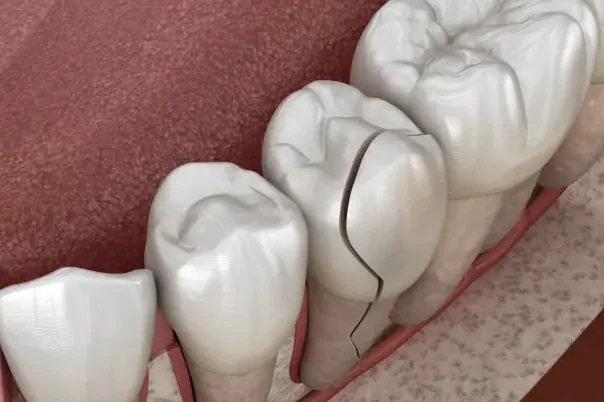
Emergency Dentists Louisville offers cracked tooth repair for the entire Louisville area. A cracked tooth is the sneakiest injury in dentistry: often there's nothing to see in the mirror, the pain comes and goes, and it can take weeks to even figure out which tooth is the problem. Meanwhile the crack keeps quietly deepening with every bite.
If biting down on one spot sends a sharp jolt through your jaw, or a tooth stings when you release your bite, that pattern has a name, and it's worth an exam sooner rather than later.
Tell us what's going on. We'll call you back fast.
We'll respond same-day. If you need to be seen right now, call us directly at 502-709-6108.
How We Diagnose and Treat a Cracked Tooth
Our cracked tooth repair in Louisville, KY diagnoses and treats the fracture lines that cause sharp pain on release of biting pressure, identifying how far the crack extends and whether the pulp, root, or supporting tissues are involved. We are the Louisville practice that takes cracked teeth seriously because fine cracks may not be directly visible on a standard dental X-ray, and we see them the same day rather than telling you to watch and wait.
Signs of a Cracked Tooth
Cracked teeth share a recognizable set of symptoms, even when the crack itself is invisible:
Sharp pain when biting or chewing, often only when pressure hits a specific angle
Pain when you release the bite, a signature sign that surprises most patients
Sensitivity to hot, cold, or sweet foods and drinks
Pain that comes and goes rather than aching constantly
Difficulty pinpointing exactly which tooth hurts
Swelling or tenderness in the gum around one tooth
Why the pain comes and goes: when you bite, the crack flexes open slightly and irritates the nerve inside. When you let go, it snaps shut. That on-again, off-again pattern is why cracked teeth get ignored for months, and why they're harder to diagnose than a cavity. It's also possible to have a crack with no symptoms at all.
Not All Cracks Are the Same
Treatment depends entirely on the type, depth, and location of the crack, which is why the exam matters more here than for almost any other dental problem.
Craze Lines
Tiny, shallow cracks in the outer enamel that are extremely common in adult teeth. They cause no pain and need no treatment beyond cosmetic touch-ups if the appearance bothers you.
Fractured Cusp
A piece of the chewing surface breaks away, often around an old filling. These usually don't reach the nerve and can typically be repaired with a filling or a crown.
Cracked Tooth
A crack runs from the chewing surface down toward the root. Caught early, a crown can often hold the tooth together. If the crack has reached the pulp, root canal treatment may be needed if the pulp becomes irreversibly inflamed, necrotic, or infected before the crown goes on. Some structural cracks can progress deeper over time.
Split Tooth and Vertical Root Fracture
A split tooth is what a cracked tooth becomes when it's ignored long enough: the tooth separates into distinct segments, and at best a portion can be saved. A vertical root fracture starts in the root below the gum and often shows minimal symptoms until infection appears. These are the outcomes early treatment exists to prevent, because they frequently end in extraction.
"It Only Hurts Sometimes" Is Not a Reason to Wait
This is the trap with cracked teeth. Because the pain is intermittent, it always feels like the problem might be resolving on its own. It isn't. A cracked tooth cannot heal, ever. Unlike bone, tooth structure has no way to knit a fracture back together, so every crack is either stable, or getting worse. Chewing, grinding, and even hot-and-cold cycles from food and drinks flex the crack and extend it a little at a time.
The practical stakes: a crack treated early often needs only a crown. The same crack a year later may need a root canal plus a crown, and the year after that, extraction and a replacement tooth. Each stage costs several times the one before it. Waiting doesn't save money on a cracked tooth. It spends it.
How We Diagnose and Repair Cracked Teeth
Because cracks hide, diagnosis is a process: we examine the tooth, test your bite tooth by tooth to reproduce the pain, and use visual examination, bite testing, pulp testing, periodontal probing, transillumination, and dental imaging and any changes in the bone around the root. Once we know the crack's type and depth, treatment depends on the crack classification, pulp diagnosis, periodontal findings, and whether the tooth can be predictably restored:
Bonding
For small, shallow cracks, tooth-colored resin seals the line and stops food and bacteria from working into it.
Crown
The main treatment for genuine cracks. A crown wraps the whole tooth and holds it together against biting force.
Root Canal + Crown
If the crack has reached the pulp, the damaged nerve tissue is removed and sealed first, then the crown protects the result.
Extraction is reserved for split teeth and root fractures that genuinely can't be saved, and if that's the honest answer for your tooth, we'll say so and go over replacement options rather than attempting a repair that's destined to fail.
When a Cracked Tooth Can't Wait
Most cracked teeth should be seen within a few days. Call us the same day if you notice:
Severe pain when biting that's getting worse rather than staying stable
Constant pain that no longer comes and goes
Swelling in the gum or face near the tooth
A piece of the tooth moving or flexing when you chew
Fever or a bad taste, which point to infection inside the crack
Those signs suggest the crack has reached the nerve or that infection has set in, and both narrow your options by the day. As an emergency dentist in Louisville KY, we hold same-day time for exactly this. Call 502-709-6108.
Cost, Insurance, and Prevention
Cost follows the treatment ladder: bonding is the least expensive, a crown costs more, and a root canal plus crown is the most involved. Since the treatment you need is determined by how deep the crack has traveled, an early appointment is the single biggest cost-control move available to you. Most dental insurance plans cover cracked tooth treatment as restorative care, and we'll verify your benefits and put the estimate in writing first.
To protect the repair and your other teeth: don't chew ice, pens, or hard candy, wear a mouthguard for contact sports, and if you grind at night, a custom nightguard takes the pressure off. Teeth with large old fillings are the most crack-prone, which is one more reason to keep up with routine exams.
Why Choose Emergency Dentists Louisville
In-house digital imaging to find cracks that are invisible to the naked eye and pinpoint the problem tooth.
Same-day appointments when the pain turns constant or swelling appears.
Save-the-tooth-first treatment planning, with extraction only when a crack genuinely can't be repaired.
Twelve years in practice diagnosing hard-to-find tooth pain for patients across Louisville.
Written estimates before treatment, with every option explained in plain language.
Frequently Asked Questions
Can a cracked tooth heal on its own?
No. Tooth structure cannot regrow across a fracture, so a crack either stays where it is or gets deeper. Treatment is the only way to stop it.
How do you find a crack you can't see?
We combine a visual exam, bite tests that reproduce the pain on the specific tooth, and X-rays may show infection, bone loss, decay, or other associated findings even when the crack itself is not visible. Bite testing, magnification, transillumination, pulp testing, and periodontal probing may also help locate the affected tooth and bone changes around the root. Together these locate cracks that a mirror never will.
Does a cracked tooth always need a root canal?
No. If the crack hasn't reached the pulp, a crown alone usually solves it. Root canal therapy enters the picture only when the nerve inside the tooth is affected.
Why does my tooth hurt when I stop biting?
That release-of-pressure pain is the classic cracked tooth signature. The crack closes as you let go, pinching the irritated inner tooth, which is why it stings on the way off the bite rather than during it.
What happens if I ignore a cracked tooth?
Cracks spread with normal chewing until the tooth splits or the root fractures, and at that point extraction is often the only option. Early treatment is how you keep the tooth and keep the bill small.
Find the Crack Before It Finds the Nerve
If one tooth zings when you bite down, trust the signal. An exam takes minutes and can save the tooth entirely.